
 EN
EN
Indoor fitness equipment faces unique environmental challenges that many manufacturers overlook, particularly when designing rebounding platforms for cardiovascular workouts. The combination of perspiration, elevated humidity from breathing, and repeated physical contact creates a corrosive environment that can rapidly degrade inferior materials. Understanding why galvanized steel serves as the backbone of premium fitness trampolines reveals critical insights about durability, safety, and long-term performance in home and commercial fitness settings.
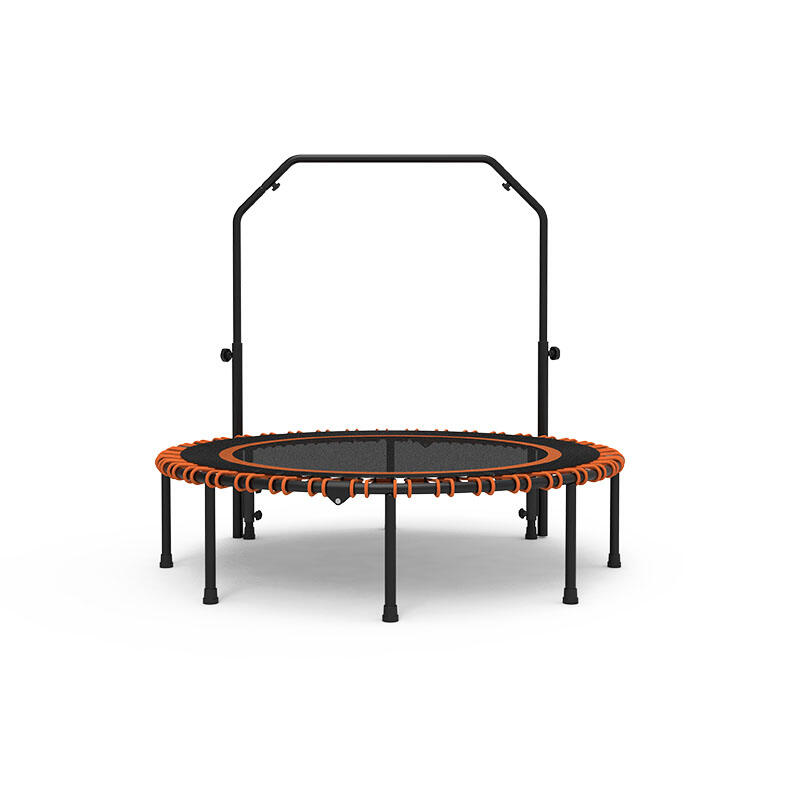
Our fitness trampoline incorporates galvanized steel specifically to address the corrosive conditions created during intensive rebounding sessions. This material choice directly responds to real-world performance requirements that distinguish professional-grade equipment from recreational alternatives. The galvanization process creates a protective barrier that maintains structural integrity even when exposed to the continuous moisture, salt deposits, and temperature fluctuations typical in workout environments.
The Corrosive Reality of Indoor Fitness Environments
Moisture Generation During Trampoline Workouts
Rebounding exercises generate substantial perspiration due to the sustained cardiovascular effort required for jumping, balancing, and stabilizing movements. A typical thirty-minute fitness trampoline session produces between 300 and 500 milliliters of sweat depending on intensity and individual physiology. This moisture doesn't simply evaporate—it lands directly on the frame, handle components, and leg structures, creating constant exposure to corrosive fluids containing salts, urea, and organic acids.
The confined nature of indoor workout spaces compounds this challenge. Unlike outdoor equipment where natural air circulation disperses moisture, home fitness rooms and commercial studios often maintain relatively stable humidity levels between 40 and 60 percent. When combined with body heat and respiration from active users, localized humidity around the equipment can spike temporarily to 70 percent or higher during use. This elevated moisture concentration accelerates oxidation processes on unprotected metal surfaces.
Commercial fitness facilities face even more severe conditions when multiple users perform consecutive sessions on the same fitness trampoline without adequate drying intervals. The cumulative moisture exposure in high-traffic environments can subject frame components to nearly constant dampness, creating ideal conditions for rust formation on conventional steel structures. This reality necessitates material selections that inherently resist corrosion rather than requiring constant maintenance interventions.
Chemical Composition of Human Perspiration and Its Impact
Human sweat contains not just water but a complex mixture of sodium chloride, potassium, calcium, magnesium, lactate, and trace amounts of ammonia and uric acid. The sodium chloride concentration typically ranges from 0.2 to 1.0 percent, creating a mildly saline solution with significant electrochemical reactivity. When this fluid contacts bare steel surfaces, it establishes an electrolytic cell that drives rapid oxidation, particularly in crevices, joints, and areas with compromised protective coatings.
The pH of perspiration varies between 4.5 and 7.0 depending on individual metabolism, diet, and hydration status, with most samples falling in the slightly acidic range. This acidity enhances the corrosive potential of sweat by facilitating the breakdown of passive oxide layers that might otherwise protect untreated metals. On a fitness trampoline frame without galvanized protection, these chemical reactions begin within hours of initial exposure and accelerate dramatically over weeks of regular use.
Additional complexity arises from the dried residue left after moisture evaporates. Salt crystals and organic compounds remain on metal surfaces, creating hygroscopic deposits that continue attracting atmospheric moisture even between workout sessions. This residual material establishes persistent corrosion sites that progressively deepen and spread, compromising structural integrity far beyond what simple water exposure would cause.
Galvanized Steel Technology and Corrosion Protection Mechanisms
Hot-Dip Galvanization Process and Zinc Coating Formation
The galvanization employed in quality fitness trampoline construction typically involves hot-dip processing, where steel components are immersed in molten zinc at approximately 450 degrees Celsius. This thermal process creates a metallurgical bond between the base steel and zinc coating, producing multiple intermetallic layers with progressively varying composition from pure zinc at the surface to iron-zinc alloys at the interface. The resulting coating thickness generally ranges from 50 to 85 micrometers, providing substantial protective mass.
The molecular bonding achieved through hot-dip galvanization creates superior adhesion compared to electroplated or painted coatings. The zinc literally alloys with the steel substrate at the boundary zone, eliminating the risk of delamination or flaking that plagues surface-applied treatments. This robust attachment ensures that the protective layer remains intact even under the mechanical stresses, impacts, and flexural loads that fitness trampoline frames experience during vigorous rebounding activities.
Beyond simple barrier protection, the zinc coating provides comprehensive coverage including internal surfaces of hollow tubing, weld zones, and geometric irregularities that would be difficult to protect with applied coatings. This complete encapsulation becomes particularly important for fitness trampoline designs using tubular steel frames where moisture can enter through connection points and corrode from within if interior surfaces lack protection.
Sacrificial Protection Through Electrochemical Priority
Zinc possesses a more electronegative potential than iron in the galvanic series, meaning it preferentially oxidizes when both metals are exposed to an electrolyte solution like perspiration. This electrochemical characteristic transforms the zinc coating into a sacrificial anode that corrodes instead of the underlying steel substrate. Even if the coating sustains scratches or abrasions that expose small areas of base metal, the surrounding zinc continues protecting those vulnerable spots through galvanic action.
This cathodic protection mechanism extends the functional lifespan of a fitness trampoline frame far beyond what barrier protection alone could achieve. While painted or powder-coated surfaces fail catastrophically once breached—allowing rust to spread rapidly beneath the remaining coating—galvanized surfaces maintain their protective function across the entire component until the zinc layer is substantially depleted. For fitness equipment subject to frequent contact and potential impact damage, this self-healing characteristic provides critical reliability.
The zinc corrosion products themselves contribute additional protection. When zinc oxidizes in the presence of moisture and carbon dioxide, it forms stable zinc carbonate compounds that create a dense, adherent patina on the surface. This secondary layer reduces the zinc consumption rate substantially after initial exposure, effectively creating a passive protective system that becomes more stable over time rather than progressively degrading like organic coatings.
Performance Comparison with Alternative Materials
Standard painted steel frames represent the most common alternative in budget fitness trampoline construction, relying entirely on organic polymer coatings for corrosion resistance. These coatings typically measure 50 to 150 micrometers thick and provide excellent initial appearance but lack the electrochemical protection and damage tolerance of galvanized systems. Once moisture penetrates through coating defects, chips, or wear points, underlying steel begins corroding immediately, often creating rust blisters that lift and delaminate surrounding paint.
Stainless steel offers superior corrosion resistance through its chromium content, which forms a passive oxide layer on exposed surfaces. However, the material cost for stainless steel exceeds galvanized steel by factors of three to five depending on grade, making it economically impractical for large frame structures. Additionally, certain stainless grades can experience localized corrosion in chloride-rich environments like perspiration, particularly in crevices and under deposits where oxygen access is restricted.
Aluminum and aluminum alloys provide excellent corrosion resistance and light weight but present challenges for fitness trampoline applications. The material's lower tensile strength requires thicker sections to achieve equivalent structural performance, often negating weight advantages. Aluminum also exhibits lower fatigue resistance under cyclic loading, which becomes problematic in rebounding equipment subject to thousands of loading cycles. The galvanized steel approach delivers optimal balance between structural performance, corrosion resistance, and manufacturing economics.
Real-World Performance Factors in Fitness Environments
Moisture Accumulation Patterns on Frame Structures
During active use, perspiration droplets land primarily on horizontal surfaces and accumulate in depressions, joints, and connection points where evaporation rates are lower. On a fitness trampoline, the handle grip area, upper frame rails, and leg junction points receive disproportionate moisture exposure. The underside of horizontal tubes can trap condensation from humid air cooling against metal surfaces, creating persistent damp conditions even in climate-controlled environments.
User contact points develop characteristic wear patterns where hands repeatedly grip handles or feet contact frame edges during mounting and dismounting. These high-friction zones experience mechanical abrasion that can compromise protective coatings on painted equipment but have minimal impact on galvanized surfaces due to the coating's metallurgical integration. The zinc layer withstands substantial mechanical contact without exposing underlying steel, maintaining protection throughout years of regular fitness trampoline use.
Seasonal variations affect corrosion rates significantly in non-climate-controlled spaces. Summer months bring elevated humidity and increased perspiration volumes, while winter heating systems can create temperature differentials that drive condensation formation on cooler metal surfaces. Galvanized frames maintain consistent performance across these environmental fluctuations, whereas painted surfaces often show accelerated degradation during high-humidity periods when coating permeability increases.
Long-Term Structural Integrity and Safety Considerations
Frame corrosion represents more than an aesthetic concern for fitness trampoline equipment—it directly affects structural safety. Rust formation creates volume expansion that can split tubular sections, weaken weld joints, and compromise connection points. Progressive oxidation reduces the effective cross-sectional area of load-bearing members, decreasing their capacity to withstand impact forces from landing users. Equipment failure during use poses obvious injury risks that mandate conservative material selection and design factors.
The fatigue life of steel components decreases substantially when corrosion pits develop on surfaces experiencing cyclic stress. Each landing generates compressive and tensile loads in the frame structure, with stress concentrations at corrosion sites initiating crack formation and propagation. Galvanized frames avoid this degradation pathway by preventing the surface irregularities that trigger fatigue crack initiation. This characteristic becomes particularly important for commercial fitness trampoline installations where equipment may experience hundreds of daily loading cycles.
Maintenance requirements differ dramatically between galvanized and coated steel frames. Painted surfaces require regular inspection for coating damage, prompt touch-up of exposed areas, and eventual complete refinishing as protective layers degrade. Galvanized fitness trampoline frames require minimal maintenance beyond periodic cleaning to remove accumulated residue. This operational simplicity reduces lifecycle costs substantially while ensuring consistent safety performance without depending on user intervention or scheduled maintenance compliance.
Manufacturing Quality and Galvanization Standards
Coating Thickness Requirements and Testing Protocols
Professional fitness trampoline manufacturers specify minimum zinc coating thickness based on expected service conditions and desired equipment lifespan. Industrial standards like ASTM A653 and ISO 1461 establish baseline requirements, with quality products typically exceeding minimum specifications. Coating thickness measurements use magnetic induction or eddy current instruments at multiple locations on each component, ensuring uniform protection across complex geometries including bends, welds, and connection fittings.
The galvanization quality directly correlates with base steel preparation before zinc application. Proper surface preparation involves caustic cleaning to remove oils and fabrication residues, followed by acid pickling to eliminate oxide scale and create chemically active steel surfaces for optimal zinc bonding. Inadequate preparation results in coating defects, poor adhesion, and premature failure regardless of zinc thickness. Reputable manufacturers implement stringent process controls and quality verification systems to ensure consistent galvanization performance.
Post-galvanization inspection includes visual assessment for coating uniformity, thickness verification, adhesion testing, and dimensional checks to confirm that the thermal process hasn't caused distortion. Quality fitness trampoline frames exhibit smooth, uniform zinc coatings without bare spots, excessive dross inclusions, or thickness variations that might compromise long-term protection. The distinctive spangled or smooth gray appearance of fresh galvanizing provides immediate visual confirmation of proper coating application.
Economic Considerations and Value Proposition
The incremental manufacturing cost for galvanized versus painted steel frames typically adds 15 to 25 percent to raw material expenses depending on component complexity and production volume. This initial premium translates to modest increases in retail pricing but delivers substantial value through extended service life and reduced maintenance requirements. A fitness trampoline with properly galvanized framing can provide 10 to 15 years of reliable service in residential environments and 5 to 8 years in commercial facilities, compared to 3 to 5 years for comparable painted equipment.
Total cost of ownership calculations favor galvanized construction overwhelmingly when considering replacement frequency, maintenance labor, and potential liability from equipment failure. Home users benefit from purchase longevity and consistent performance without monitoring coating condition or scheduling refinishing. Commercial operators realize operational savings through reduced equipment replacement cycles and minimized downtime for maintenance interventions.
The sustainability advantages of galvanized steel also merit consideration in equipment selection decisions. The extended service life reduces material consumption and waste generation compared to more frequently replaced alternatives. Steel recycling infrastructure processes galvanized material efficiently, with zinc recovery systems capturing the coating metals for reuse. These environmental attributes align with corporate responsibility objectives and facility sustainability certifications increasingly common in commercial fitness operations.
FAQ
How long does galvanized coating last on fitness trampoline frames?
Under typical residential use conditions with moderate humidity and regular cleaning, galvanized coating on fitness trampoline frames typically provides 10 to 15 years of effective corrosion protection before significant zinc depletion occurs. Commercial environments with intensive daily use may experience 5 to 8 years of service life. The actual duration depends on coating thickness, environmental conditions, maintenance practices, and usage intensity. Even after visible zinc consumption, the remaining coating continues providing some sacrificial protection to underlying steel.
Can galvanized steel frames be safely used in humid basement or garage workout spaces?
Galvanized steel frames are specifically well-suited for humid basement and garage environments where conventional painted equipment would deteriorate rapidly. The zinc coating maintains protective function across wide humidity ranges and temperature fluctuations common in these spaces. For optimal performance, ensure adequate ventilation to minimize persistent condensation and periodically wipe down frame surfaces to remove accumulated moisture and residue. The corrosion resistance of galvanized construction makes fitness trampoline equipment practical for installation in spaces where climate control is limited.
Does galvanized coating affect the appearance or feel of fitness trampoline frames?
Fresh galvanized coating presents a distinctive metallic gray appearance with either spangled crystalline patterns or smooth matte finish depending on zinc alloy composition and cooling rate. Over time, exposure to atmosphere develops a uniform dull gray patina as stable zinc carbonate compounds form on the surface. The coating texture is slightly rougher than painted finishes but does not affect grip comfort on properly designed handle components that include foam or rubber contact surfaces. Many users prefer the industrial aesthetic and authentic appearance of galvanized fitness trampoline frames compared to glossy painted alternatives.
What maintenance is required for galvanized fitness trampoline frames?
Galvanized frames require minimal maintenance compared to painted alternatives. Routine care involves wiping down surfaces after use to remove perspiration and accumulated moisture, preventing residue buildup that can retain dampness. Periodic washing with mild soap solution removes any accumulated deposits, followed by thorough drying. Avoid abrasive cleaning tools that might scratch the zinc surface unnecessarily. No coating touch-up, refinishing, or rust treatment is typically required throughout the service life of quality galvanized fitness trampoline equipment, making it ideal for users seeking reliable performance with minimal upkeep.
Table of Contents
- The Corrosive Reality of Indoor Fitness Environments
- Galvanized Steel Technology and Corrosion Protection Mechanisms
- Real-World Performance Factors in Fitness Environments
- Manufacturing Quality and Galvanization Standards
-
FAQ
- How long does galvanized coating last on fitness trampoline frames?
- Can galvanized steel frames be safely used in humid basement or garage workout spaces?
- Does galvanized coating affect the appearance or feel of fitness trampoline frames?
- What maintenance is required for galvanized fitness trampoline frames?