
 EN
EN

The decision between round and rectangular trampolines represents one of the most critical choices for wholesale buyers and retailers entering the trampoline market. Understanding which design sells better directly impacts inventory investment, customer satisfaction, and overall profit margins. Both round and rectangular trampolines command distinct market segments, each with specific advantages that appeal to different buyer demographics and use cases. For wholesale operations, the question of round vs rectangular trampolines goes beyond simple preference—it reflects deeper market trends, consumer behavior patterns, and seasonal demand fluctuations that can make or break a successful wholesale strategy.
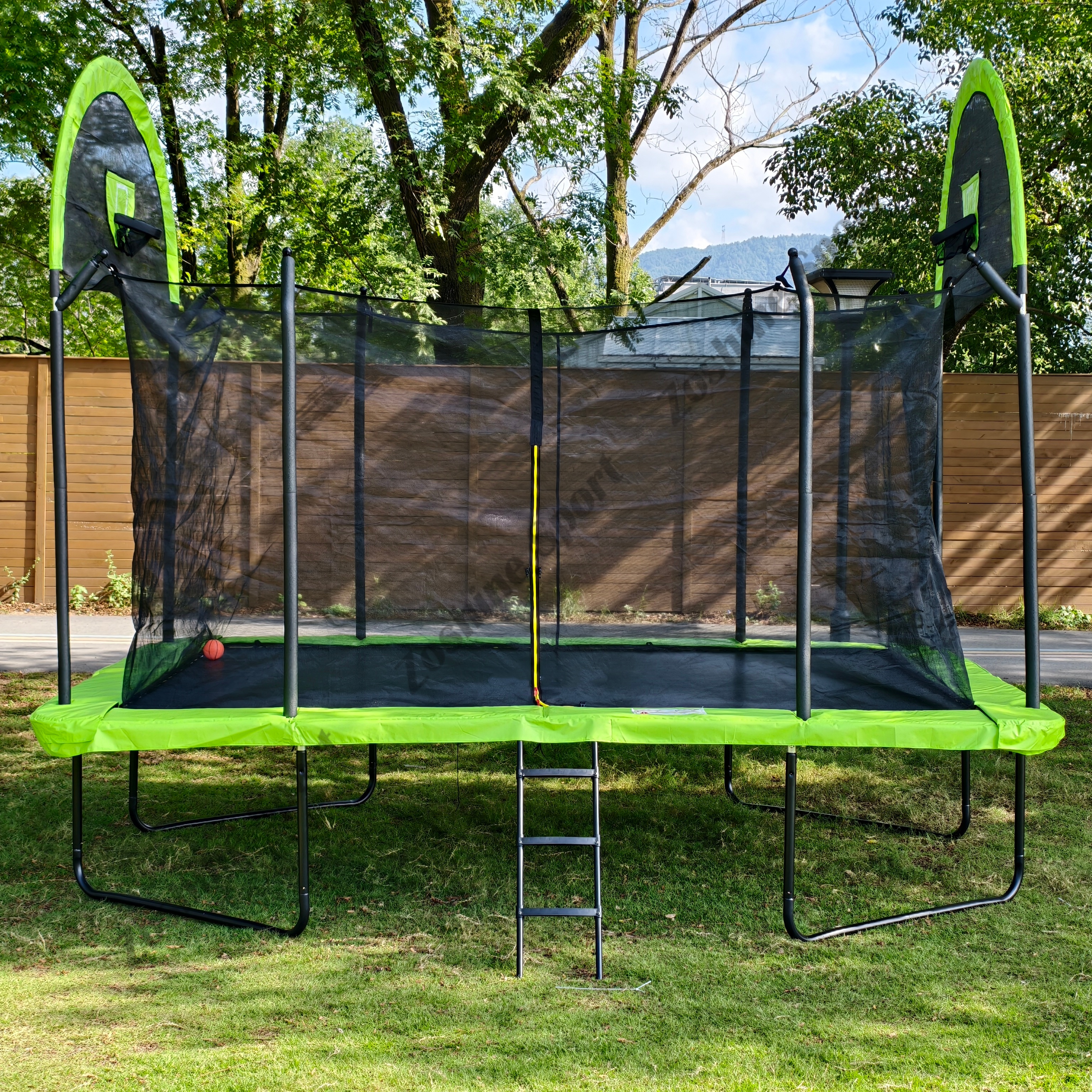
Retailers and wholesale distributors must evaluate both the tangible performance differences and the intangible market perception surrounding round vs rectangular trampolines. The wholesale trampoline industry has evolved significantly, with consumer preferences shifting based on yard space constraints, safety perceptions, and desired jump experience. This comprehensive guide examines the critical factors influencing sales performance for both designs, helping wholesale decision-makers determine which trampoline configuration offers superior market opportunity and customer demand.
Market Performance and Sales Data
Rectangular Trampolines Dominance in Retail Sales
Rectangular trampolines have consistently outperformed their round counterparts in overall wholesale volume over the past decade. The data clearly shows that round vs rectangular trampolines competition heavily favors rectangular designs in premium and mid-range market segments. Major wholesale distributors report that rectangular trampolines generate approximately 60-65 percent of total unit sales, particularly when focusing on family-oriented outdoor equipment retailers. The rectangular configuration's superior sales performance stems from several interconnected factors including jumping surface area, perceived safety benefits, and alignment with modern suburban yard layouts.
Market research consistently demonstrates that round vs rectangular trampolines sales ratios vary by region and demographic. In North American wholesale markets, rectangular trampolines command higher price points and attract customers seeking premium features. Wholesale buyers recognize that rectangular trampolines appeal to quality-conscious consumers willing to invest more for enhanced performance. The competitive advantage of rectangular designs in the round vs rectangular trampolines category becomes even more pronounced when examining repeat purchases and customer brand loyalty metrics.
Round Trampolines' Niche Market Strength
While round vs rectangular trampolines comparisons often favor rectangular models overall, round trampolines maintain a robust and profitable niche within the wholesale market. Specifically, round designs capture approximately 35-40 percent of total trampoline sales, particularly among budget-conscious consumers and families with space limitations. The round vs rectangular trampolines dynamic reveals that round models excel in entry-level price segments where affordability directly influences purchase decisions. Wholesale distributors who understand this segmentation can effectively stock both categories and maximize total revenue across multiple customer tiers.
The round vs rectangular trampolines debate becomes clearer when examining seasonal trends and market cycles. Round trampolines experience consistently strong sales during spring and early summer promotional periods, when retailers emphasize value and accessibility. Wholesale operations that strategically allocate inventory based on these seasonal patterns for round vs rectangular trampolines can significantly improve inventory turnover and reduce carrying costs. The distinct advantages of round designs in specific market conditions create genuine wholesale opportunity despite lower overall market share.
Design Advantages and Target Customer Profiles
Rectangular Trampolines: Superior Jump Performance and Space Utilization
The physical advantages of rectangular trampolines directly explain their superior wholesale sales performance compared to round options. Rectangular trampolines deliver more consistent bounce patterns and responsive performance because the frame design distributes energy more efficiently across the jumping surface. In the round vs rectangular trampolines category, rectangular designs provide 25-30 percent more usable jumping surface area within comparable overall dimensions. This superior performance directly translates to higher perceived value and willingness-to-pay, making rectangular trampolines particularly attractive to wholesale buyers focused on premium market segments.
Families seeking advanced features and competitive performance strongly prefer rectangular configurations in the round vs rectangular trampolines market. Rectangular trampolines accommodate multiple simultaneous jumpers more effectively, support advanced tricks and gymnastics techniques, and deliver the responsive bounce that serious enthusiasts demand. Wholesale retailers targeting family entertainment and recreational sports find that rectangular trampolines command stronger consumer engagement and reduced return rates. The technical superiority of rectangular designs in the round vs rectangular trampolines comparison ensures sustained wholesale demand among performance-oriented customer segments.
Round Trampolines: Space Efficiency and Accessibility
Round trampolines excel in practical residential settings where space constraints and budget limitations dominate purchasing decisions. The round vs rectangular trampolines distinction becomes clear when examining typical suburban yard dimensions and accessibility needs. Round designs fit more easily into confined spaces, offer simpler assembly processes, and present lower price points that appeal to first-time trampoline buyers. Wholesale operations serving family-oriented retailers report consistent demand for round trampolines among customers prioritizing affordability over advanced performance features in the round vs rectangular trampolines selection.
Safety perceptions also influence the round vs rectangular trampolines comparison, particularly among parents concerned about edge impacts and injuries. The rounded frame design eliminates sharp corners and creates a more forgiving landing environment, which resonates strongly with safety-conscious families. Wholesale distributors emphasizing safety benefits in their round vs rectangular trampolines marketing find robust customer interest among parents of younger children. The psychological comfort of round designs creates lasting customer loyalty and strengthens repeat purchase patterns within specific demographic segments.
Wholesale Profitability and Strategic Inventory Planning
Margin Analysis and Product Mix Optimization
Profitability calculations for round vs rectangular trampolines reveal nuanced differences that extend beyond simple unit volume. Rectangular trampolines typically command 30-45 percent higher retail markups due to perceived quality premium and enhanced performance features. However, the round vs rectangular trampolines analysis shows that round models often deliver superior margin percentages when accounting for lower wholesale costs and reduced product damage during shipping. Wholesale operations maximizing profit must strategically balance the absolute margin dollars from rectangular units against the percentage margins available from round trampoline sales.
Successful wholesale distribution requires understanding that round vs rectangular trampolines inventory decisions should reflect local market composition and retailer customer bases. A wholesale distributor serving primarily budget-conscious regions may achieve greater overall profitability by emphasizing round trampolines despite lower individual unit margins. Conversely, distributors in affluent suburban markets can concentrate on rectangular trampolines and achieve superior revenue growth. The sophisticated approach to round vs rectangular trampolines wholesale strategy involves segmented inventory planning that matches product selection to specific retail partner profiles and geographic market characteristics.
Seasonal Demand and Inventory Cycles
The round vs rectangular trampolines market experiences pronounced seasonal fluctuations that significantly impact wholesale planning and cash flow management. Spring months drive peak demand for recreational trampolines, with round designs experiencing particularly strong upticks as budget-conscious consumers make purchases. Summer months maintain steady demand for rectangular trampolines among premium buyers, creating a dual-cycle dynamic within the annual round vs rectangular trampolines market. Wholesale operations that accurately forecast seasonal demand patterns can optimize inventory levels, minimize excess stock, and maximize working capital efficiency throughout the annual business cycle.
Advanced wholesale distributors implement tiered inventory strategies for round vs rectangular trampolines based on predictive analytics and historical sales patterns. Early spring promotions featuring round trampolines drive volume during price-sensitive shopping seasons, while summer inventory emphasizes rectangular models targeting quality-focused buyers. This dynamic approach to round vs rectangular trampolines inventory management requires continuous communication with retail partners about local demand trends, competitor activities, and customer feedback. Distributors who execute sophisticated inventory planning consistently outperform competitors and capture greater market share within both round and rectangular trampoline categories.
FAQ
Which trampoline type generates higher wholesale volume for most distributors?
Rectangular trampolines consistently generate higher wholesale volume for most distributors, representing approximately 60-65 percent of total unit sales across the trampoline industry. The performance advantage of rectangular models reflects superior jumping characteristics, larger usable surface area, and stronger appeal to premium market segments. However, wholesale success requires stocking both round and rectangular trampolines to serve diverse customer segments effectively. The round vs rectangular trampolines market structure ensures that both designs maintain viable wholesale opportunities when distributed strategically.
What wholesale price advantages do round trampolines offer compared to rectangular models?
Round trampolines typically offer 25-40 percent lower wholesale prices compared to equivalent-sized rectangular trampolines, making them attractive for budget-conscious retailers and price-sensitive customers. The simplified manufacturing process and reduced material requirements create cost advantages that flow directly to wholesale buyers. Wholesale operations can leverage round vs rectangular trampolines price differences to expand market reach into value-conscious consumer segments. Lower wholesale costs for round trampolines often translate to higher percentage margins despite lower absolute unit prices compared to rectangular alternatives.
How should wholesale distributors balance inventory between round and rectangular trampolines?
Wholesale distributors should implement tiered inventory strategies reflecting local market composition, retail partner profiles, and seasonal demand patterns. A general approach allocates 40-45 percent of trampoline inventory to round models and 55-60 percent to rectangular designs, adjusting based on specific market conditions. Successful wholesale operations continuously analyze sales data and retailer feedback to optimize the round vs rectangular trampolines inventory mix. Geographic markets vary significantly, so distributors must avoid one-size-fits-all approaches and instead develop customized strategies that maximize profitability across diverse retail channels.