
 EN
EN
A round trampoline factory operating in today's competitive global marketplace faces the critical challenge of maintaining consistent product quality across diverse international markets with varying standards, regulations, and customer expectations. The ability to guarantee consistent quality becomes paramount when serving customers from North America to Europe, Asia, and beyond, where safety requirements, material standards, and performance expectations can differ significantly. Establishing rigorous quality control systems represents the cornerstone of any successful round trampoline factory seeking to build trust and maintain competitive advantage in global markets.
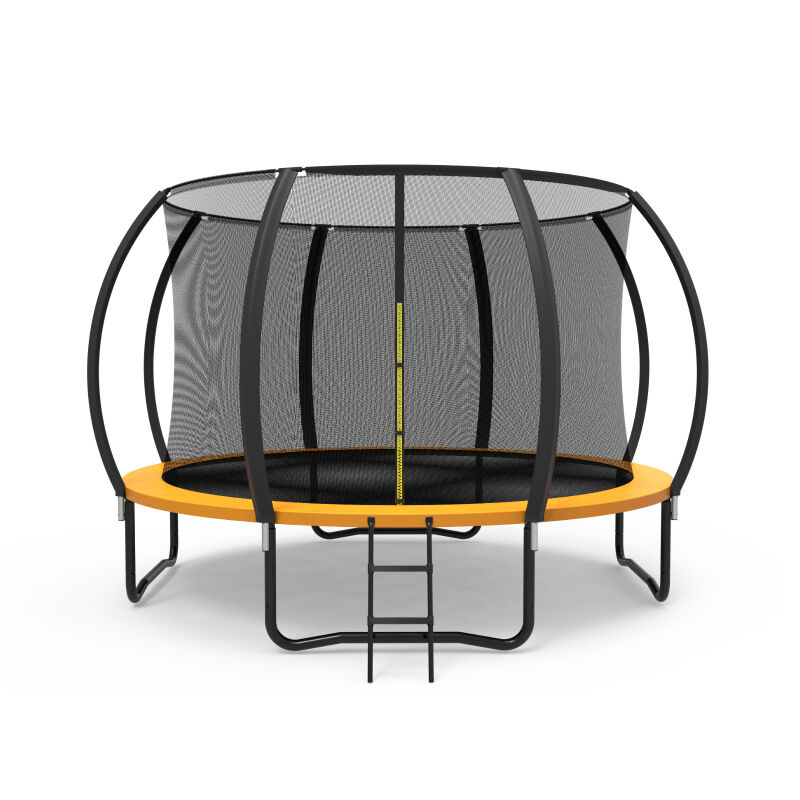
The implementation of comprehensive quality control measures within a round trampoline factory extends far beyond basic manufacturing oversight, encompassing sophisticated testing protocols, material verification systems, and continuous monitoring processes that ensure every product meets predetermined specifications. These systems must be designed to accommodate the unique challenges of round trampoline production, including frame integrity, spring tension consistency, mat durability, and safety enclosure reliability, while simultaneously adapting to the specific requirements of different global markets and their respective regulatory frameworks.
Establishing Comprehensive Quality Control Frameworks
Raw Material Verification and Testing Protocols
A round trampoline factory must implement stringent raw material verification processes that begin with supplier qualification and extend through incoming material inspection and testing. Every component entering the production facility, from galvanized steel tubing for frames to UV-resistant polypropylene for jumping mats, requires verification against predetermined specifications through standardized testing procedures. These protocols ensure that materials meet not only the factory's internal standards but also comply with international safety requirements such as ASTM, EN, and AS/NZS standards that govern trampoline safety across different global markets.
The material testing process involves both destructive and non-destructive testing methods to verify tensile strength, corrosion resistance, UV stability, and dimensional accuracy. For round trampoline production, particular attention must be paid to spring steel quality, as variations in spring tension directly impact bounce consistency and user safety. Advanced testing equipment, including tensile testing machines, salt spray chambers for corrosion testing, and UV exposure chambers, enables the round trampoline factory to validate material performance under simulated real-world conditions before materials enter the production process.
Manufacturing Process Standardization
Standardizing manufacturing processes across all production lines represents a fundamental requirement for consistent quality output in any round trampoline factory. This standardization involves developing detailed work instructions, implementing statistical process control measures, and establishing critical control points throughout the manufacturing workflow. Each stage of production, from frame welding and powder coating to mat stitching and spring attachment, must follow predetermined procedures with clearly defined tolerances and inspection criteria.
The round trampoline factory must establish process control measures that monitor key variables such as welding temperatures, coating thickness, stitching tension, and assembly torque specifications. Real-time monitoring systems can track these variables and alert operators when processes drift outside acceptable parameters, enabling immediate corrective action before defective products are produced. This proactive approach to process control significantly reduces variation in final product quality and ensures consistent performance characteristics across all manufactured round trampolines.
Implementing Advanced Testing and Inspection Systems
In-Process Quality Monitoring
In-process quality monitoring within a round trampoline factory requires the implementation of checkpoint inspections at strategic points throughout the manufacturing process. These checkpoints serve as quality gates where specific attributes are measured, tested, and verified before products advance to subsequent manufacturing stages. For round trampoline production, critical checkpoints include frame welding integrity verification, powder coating thickness measurement, jumping mat tensile testing, and spring installation torque verification.
Advanced monitoring systems can incorporate automated inspection technologies such as vision systems for dimensional verification, ultrasonic testing for weld integrity assessment, and load testing equipment for spring and frame strength validation. The round trampoline factory benefits from these technologies by achieving consistent inspection standards that eliminate human error and provide objective, repeatable measurements. Data collected from these systems creates a comprehensive quality database that enables trend analysis and predictive quality management.
Final Product Testing Protocols
Comprehensive final product testing represents the ultimate quality assurance measure for any round trampoline factory committed to consistent quality delivery. These testing protocols must encompass all critical performance and safety parameters, including bounce consistency, structural integrity, safety enclosure effectiveness, and overall product durability. Testing procedures should simulate real-world usage conditions and stress levels that trampolines will experience throughout their service life in various global markets.
The testing regimen typically includes static load testing to verify frame strength, dynamic bounce testing to ensure consistent performance, fatigue testing to validate long-term durability, and environmental exposure testing to confirm weather resistance. Each round trampoline undergoes these comprehensive tests before packaging and shipment, with detailed test records maintained for traceability and continuous improvement purposes. This thorough testing approach provides confidence that every product leaving the round trampoline factory meets or exceeds specified quality standards.
Maintaining Regulatory Compliance Across Global Markets
International Safety Standard Adherence
Operating a round trampoline factory that serves global markets requires comprehensive understanding and adherence to diverse international safety standards and regulations. Different regions maintain specific requirements for trampoline design, testing, and certification, including ASTM F381 in the United States, EN 71-14 in Europe, and AS/NZS 4989 in Australia and New Zealand. The factory must design and implement quality control systems that ensure products comply with all applicable standards for their intended markets.
Compliance management extends beyond initial product design to encompass ongoing verification that manufacturing processes consistently produce products meeting regulatory requirements. This involves regular calibration of testing equipment, periodic validation of testing procedures, and maintenance of detailed documentation demonstrating compliance with applicable standards. The round trampoline factory must also stay current with evolving safety standards and implement necessary changes to maintain compliance across all served markets.
Documentation and Traceability Systems
Robust documentation and traceability systems enable a round trampoline factory to demonstrate quality control effectiveness and provide accountability throughout the supply chain. These systems must capture detailed records of raw material sources, manufacturing process parameters, inspection results, and testing data for every produced unit. Complete traceability allows rapid identification and containment of quality issues should they occur, minimizing potential impact on customers and markets.
Digital quality management systems can streamline documentation processes while ensuring data integrity and accessibility. These systems typically include barcode or RFID tracking for component and product identification, automated data collection from manufacturing equipment, and comprehensive reporting capabilities for quality metrics analysis. The round trampoline factory benefits from improved efficiency in quality management while maintaining the detailed records necessary for regulatory compliance and customer confidence.
Continuous Improvement and Performance Monitoring
Data-Driven Quality Enhancement
A forward-thinking round trampoline factory leverages quality data to drive continuous improvement initiatives that enhance product consistency and customer satisfaction. Statistical analysis of quality metrics enables identification of trends, patterns, and opportunities for improvement that might not be apparent through traditional inspection methods. This data-driven approach allows factories to proactively address potential quality issues before they impact product performance or customer experience.
Quality data analysis can reveal correlations between manufacturing variables and final product performance, enabling optimization of process parameters for improved consistency. For example, analysis might show relationships between welding parameters and frame strength variations, or correlations between material lot characteristics and finished product durability. The round trampoline factory can use these insights to refine manufacturing processes and reduce variation in product quality.
Customer Feedback Integration
Incorporating customer feedback into quality control systems provides valuable real-world performance data that complements laboratory testing and internal quality measures. Customer feedback can reveal quality issues that may not be apparent through traditional testing methods, particularly those related to long-term performance, user experience, and market-specific requirements. The round trampoline factory must establish systematic processes for collecting, analyzing, and responding to customer feedback to maintain product quality alignment with market expectations.
Feedback integration involves establishing communication channels with distributors, retailers, and end users to gather performance data and quality concerns. This information should be systematically analyzed to identify patterns that might indicate manufacturing process variations or design improvements needed for specific markets. The round trampoline factory can then implement corrective actions and design modifications to address identified issues and enhance overall product quality and customer satisfaction.
FAQ
What specific testing standards should a round trampoline factory follow for global market compliance?
A round trampoline factory serving global markets must comply with multiple international standards including ASTM F381-16 for the United States market, EN 71-14 for European markets, AS/NZS 4989 for Australia and New Zealand, and CSA Z614 for Canadian markets. Each standard specifies different testing requirements for structural integrity, safety features, and performance characteristics. The factory should implement testing protocols that meet the most stringent requirements across all target markets to ensure universal compliance and product acceptance.
How can a round trampoline factory ensure consistent spring tension across all products?
Consistent spring tension requires strict control over raw spring steel specifications, manufacturing processes, and installation procedures. The round trampoline factory should implement incoming material testing to verify spring steel properties, use precision manufacturing equipment with proper tension control settings, and establish standardized installation torque specifications. Regular calibration of spring tensioning equipment and periodic testing of finished products helps maintain consistency. Additionally, implementing statistical process control with defined control limits enables early detection of tension variations before they impact product quality.
What documentation is required to demonstrate quality control effectiveness to international customers?
Comprehensive quality documentation should include material certificates of compliance, manufacturing process records, inspection checklists, testing results, and calibration certificates for all measuring equipment. The round trampoline factory must maintain detailed batch records showing raw material traceability, process parameters, and quality test results for each production lot. International customers typically require third-party certification documents, compliance declarations for applicable safety standards, and quality system certifications such as ISO 9001. All documentation should be maintained in both original language and English translations for global accessibility.
How frequently should quality control procedures be reviewed and updated in a round trampoline factory?
Quality control procedures should undergo formal review at least annually, with additional reviews triggered by changes in safety standards, customer requirements, manufacturing processes, or supplier materials. The round trampoline factory should establish a scheduled review process that evaluates procedure effectiveness, incorporates lessons learned from quality incidents, and addresses evolving market requirements. Interim updates may be necessary when new testing methods become available, equipment capabilities change, or regulatory requirements are modified. Continuous monitoring of quality metrics can also indicate when procedure modifications are needed to maintain optimal performance and consistency.
Table of Contents
- Establishing Comprehensive Quality Control Frameworks
- Implementing Advanced Testing and Inspection Systems
- Maintaining Regulatory Compliance Across Global Markets
- Continuous Improvement and Performance Monitoring
-
FAQ
- What specific testing standards should a round trampoline factory follow for global market compliance?
- How can a round trampoline factory ensure consistent spring tension across all products?
- What documentation is required to demonstrate quality control effectiveness to international customers?
- How frequently should quality control procedures be reviewed and updated in a round trampoline factory?