
 EN
EN
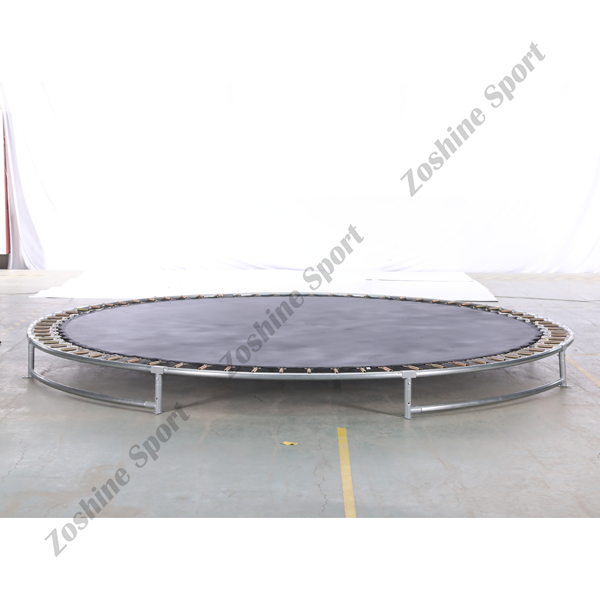
A high-quality round trampoline serves as more than just a source of entertainment for children—it functions as a sophisticated developmental tool that significantly enhances motor coordination through controlled bouncing movements. The circular design of a round trampoline creates a natural center point that encourages children to maintain balance while engaging multiple muscle groups simultaneously, fostering the development of proprioception and spatial awareness that are crucial for overall physical coordination.
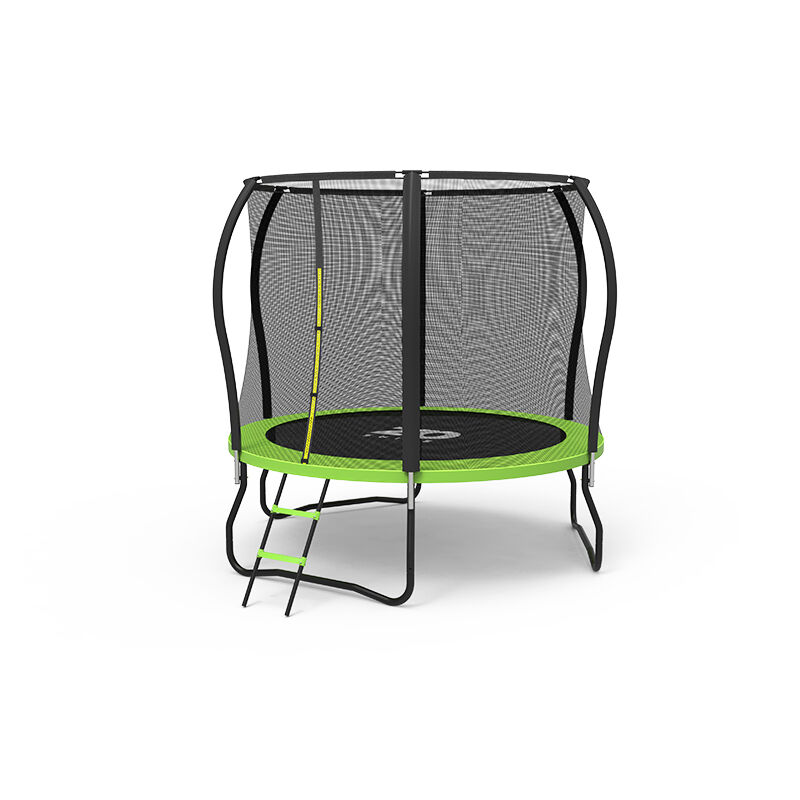
The unique biomechanical demands of bouncing on a round trampoline activate the vestibular system in the inner ear, which controls balance and spatial orientation, while simultaneously engaging the cerebellum to coordinate complex movement patterns. This dual activation creates a powerful neurological training environment that improves bilateral coordination, timing precision, and the integration of sensory feedback systems that children rely on for everyday activities ranging from walking and running to writing and playing sports.
Neurological Mechanisms Behind Trampoline Coordination Training
Vestibular System Activation and Balance Development
The continuous up-and-down motion experienced on a round trampoline provides intense vestibular stimulation that challenges the inner ear's balance organs to constantly recalibrate the child's sense of position in space. This repetitive stimulation strengthens the vestibular system's ability to process motion information accurately, leading to improved static and dynamic balance capabilities that transfer to ground-based activities. The circular bouncing surface of a round trampoline ensures that vestibular input occurs from multiple directional planes, creating more comprehensive balance training than linear movement patterns.
Children who regularly use a round trampoline develop enhanced proprioceptive awareness, which is the body's ability to sense its position and movement in space without visual input. This heightened proprioception results from the constant need to adjust body position during bouncing, forcing the nervous system to process and integrate sensory information from muscles, joints, and tendons more efficiently. The round design naturally guides children toward the center, providing consistent feedback about spatial boundaries and encouraging the development of midline awareness that is essential for coordinated movement.
Cerebellar Function Enhancement Through Rhythmic Bouncing
The cerebellum, often called the brain's coordination center, receives intensive workout during round trampoline activities as it must continuously calculate timing, force, and spatial relationships to maintain controlled bouncing patterns. Each bounce requires the cerebellum to predict landing timing, adjust muscle tension, and coordinate the complex interplay between opposing muscle groups to maintain stability and control. This repeated cerebellar activation strengthens neural pathways responsible for motor planning and execution, resulting in smoother, more coordinated movements in all physical activities.
The rhythmic nature of bouncing on a round trampoline creates what neurologists term 'entrainment,' where the brain's natural rhythms synchronize with the bouncing cadence, promoting improved timing and sequencing abilities. This neurological synchronization enhances the child's ability to coordinate complex movement patterns and improves their capacity to learn new motor skills more efficiently. The predictable bounce pattern of a quality round trampoline provides the consistent sensory input necessary for establishing these beneficial neural rhythm patterns.
Physical Coordination Benefits Through Multi-Planar Movement
Bilateral Integration and Cross-Pattern Development
A round trampoline naturally encourages bilateral integration by requiring children to use both sides of their body simultaneously and reciprocally during bouncing activities. The circular design promotes cross-pattern movements where opposite arms and legs work together, strengthening the corpus callosum that connects the brain's two hemispheres and facilitates communication between them. This enhanced interhemispheric communication is crucial for developing sophisticated coordination skills that support academic learning, particularly in areas requiring bilateral integration such as reading and writing.
The unstable surface of a round trampoline demands constant micro-adjustments from both sides of the body, forcing the development of refined motor control and the ability to coordinate subtle movements between limbs. Children learn to distribute their weight evenly while maintaining symmetrical movement patterns, skills that translate directly to improved performance in sports, dance, and other physical activities that require precise bilateral coordination. The round shape ensures that these bilateral challenges occur consistently regardless of the child's position on the bouncing surface.
Core Stability and Postural Control Development
The dynamic environment of a round trampoline creates constant challenges to core stability as children must engage their deep abdominal and spinal muscles to maintain upright posture during bouncing. This continuous core activation strengthens the muscular foundation that supports all coordinated movement patterns and provides the stable base from which arms and legs can move efficiently. The unpredictable nature of trampoline bouncing forces the core muscles to respond rapidly to changing demands, developing the reactive strength and endurance necessary for optimal postural control.
Children who regularly use a round trampoline develop superior postural awareness and the ability to maintain proper alignment during dynamic activities. The circular design naturally centralizes bouncing activity, requiring consistent activation of postural muscles to maintain position within the safe bouncing zone. This repeated postural challenge strengthens the deep stabilizing muscles that are often underdeveloped in children with coordination difficulties, providing a therapeutic benefit that extends far beyond recreational bouncing.
Sensory Integration and Processing Enhancement
Multi-Sensory Input Processing
The round trampoline environment provides rich multi-sensory input that challenges children to integrate information from visual, vestibular, and proprioceptive systems simultaneously. During bouncing activities, children must process visual information about their position relative to the trampoline's circular boundary while simultaneously interpreting vestibular signals about their motion in space and proprioceptive feedback from their muscles and joints. This complex sensory integration process strengthens the neural pathways responsible for coordinating multiple sensory inputs, a skill that is fundamental to effective motor coordination.
The continuous sensory challenges presented by a quality round trampoline help children develop more efficient sensory processing strategies, enabling them to filter relevant information from sensory noise and respond appropriately to changing environmental demands. Children who struggle with sensory processing disorders often show marked improvement in coordination and motor planning after regular round trampoline use, as the structured sensory input helps organize their nervous system's responses to sensory information.
Spatial Awareness and Directionality Skills
The circular boundary of a round trampoline provides clear spatial reference points that help children develop enhanced spatial awareness and understanding of directional concepts. As children bounce and move within the circular space, they naturally learn to judge distances, understand spatial relationships, and develop internal maps of their movement environment. This spatial learning translates to improved coordination in activities that require accurate spatial judgment, such as catching balls, navigating obstacle courses, or participating in team sports.
The round design encourages children to explore movement in all directions while maintaining awareness of the circular boundary, promoting the development of directional concepts and spatial vocabulary. Children learn to understand and execute movements involving forward, backward, left, right, and rotational directions while maintaining their position within the safe bouncing area of the round trampoline. This comprehensive spatial training enhances their ability to coordinate complex movement sequences that involve multiple directional changes.
Motor Planning and Executive Function Development
Sequential Movement Planning and Execution
Regular use of a round trampoline significantly improves children's motor planning abilities by requiring them to sequence multiple actions while adapting to the dynamic bouncing environment. Children must plan their movements several bounces ahead, considering factors such as bounce height, landing position, and subsequent movement goals while maintaining overall coordination and safety. This advanced motor planning strengthens the prefrontal cortex's executive function capabilities and enhances the child's ability to organize and execute complex movement sequences in other activities.
The predictable yet challenging environment of a quality round trampoline allows children to practice increasingly complex movement combinations while receiving immediate feedback about their coordination and timing. As children progress from simple bouncing to more advanced skills like turns, jumps, and directional changes, they develop sophisticated motor planning abilities that support improved performance in academic tasks requiring sequential processing and organized movement patterns.
Attention and Focus Enhancement Through Movement
The engaging nature of round trampoline activities naturally captures children's attention while providing the type of movement input that many children need to maintain focus and alertness. The rhythmic bouncing motion has a regulating effect on the nervous system, helping hyperactive children calm their energy while simultaneously alerting under-responsive children to optimal arousal levels for learning and coordination. This attention regulation through movement creates ideal conditions for developing refined motor coordination skills.
Children who struggle with attention difficulties often show improved focus and task persistence after round trampoline sessions, as the movement input helps organize their nervous system and prepare them for activities requiring sustained concentration. The combination of physical coordination challenges and attention regulation makes the round trampoline an effective tool for supporting children who need movement-based interventions to achieve their optimal learning and coordination potential.
Long-Term Coordination Benefits and Skill Transfer
Athletic Performance and Sports Readiness
The coordination skills developed through regular round trampoline use provide a strong foundation for athletic performance across multiple sports and physical activities. The enhanced balance, timing, spatial awareness, and bilateral coordination that children develop on a round trampoline directly transfer to improved performance in activities such as gymnastics, soccer, basketball, tennis, and martial arts. The dynamic balance training provided by trampoline bouncing is particularly valuable for sports that require quick direction changes, jumping, and aerial awareness.
Children who have extensive round trampoline experience often demonstrate superior body awareness and control when learning new sports skills, as their nervous systems have been trained to process and respond to complex movement challenges efficiently. The confidence and coordination gained from mastering trampoline skills translates to increased willingness to attempt new physical challenges and improved success rates when learning sport-specific techniques.
Academic and Daily Living Skill Enhancement
The coordination improvements gained from round trampoline use extend beyond physical activities to support academic performance and daily living skills that require fine and gross motor coordination. Children who develop strong foundational coordination through trampoline activities often show improvements in handwriting, cutting with scissors, and other fine motor tasks that rely on the same underlying neurological systems that control gross motor coordination. The bilateral integration fostered by round trampoline use is particularly beneficial for reading and mathematical skills that require coordinated processing between brain hemispheres.
The enhanced body awareness, spatial processing, and motor planning abilities developed through regular round trampoline use support children's independence in daily activities such as dressing, organizing personal belongings, and navigating complex environments. Parents and teachers often report that children who regularly use a round trampoline show improved organizational skills, better task completion rates, and increased confidence in physical and academic challenges.
FAQ
How long should children use a round trampoline to see coordination improvements?
Most children begin showing noticeable coordination improvements within 4-6 weeks of regular round trampoline use, with sessions lasting 15-30 minutes occurring 3-4 times per week. The neuroplasticity of developing brains allows for relatively rapid adaptation to the coordination challenges presented by quality round trampoline activities, though individual progress varies based on the child's starting coordination level and consistency of use.
Are there specific bouncing techniques that maximize coordination benefits on a round trampoline?
Coordination benefits are maximized when children progress from basic center bouncing to more complex activities such as controlled directional bouncing, gentle turning movements, and simple coordination challenges like clapping while bouncing. The key is maintaining control and proper form rather than achieving maximum height, as controlled movements provide better neurological training than uncontrolled high bouncing on the round trampoline.
Can children with existing coordination difficulties safely use a round trampoline for improvement?
Children with coordination difficulties can safely benefit from round trampoline use when proper supervision and progressive skill development are implemented. Starting with assisted bouncing and very gentle movements allows these children to build confidence and coordination gradually while minimizing injury risk. The predictable circular design of a round trampoline actually provides helpful spatial boundaries that many children with coordination challenges find reassuring and supportive.
What safety features should parents look for in a round trampoline designed for coordination development?
Essential safety features include a high-quality enclosure net system, thick padding covering the springs and frame, and a sturdy circular frame construction that maintains consistent bounce characteristics. The round trampoline should have appropriate size for the intended users and meet current safety standards, with regular inspection and maintenance ensuring that coordination training occurs in a safe, controlled environment that supports skill development rather than creating injury risks.
Table of Contents
- Neurological Mechanisms Behind Trampoline Coordination Training
- Physical Coordination Benefits Through Multi-Planar Movement
- Sensory Integration and Processing Enhancement
- Motor Planning and Executive Function Development
- Long-Term Coordination Benefits and Skill Transfer
-
FAQ
- How long should children use a round trampoline to see coordination improvements?
- Are there specific bouncing techniques that maximize coordination benefits on a round trampoline?
- Can children with existing coordination difficulties safely use a round trampoline for improvement?
- What safety features should parents look for in a round trampoline designed for coordination development?